
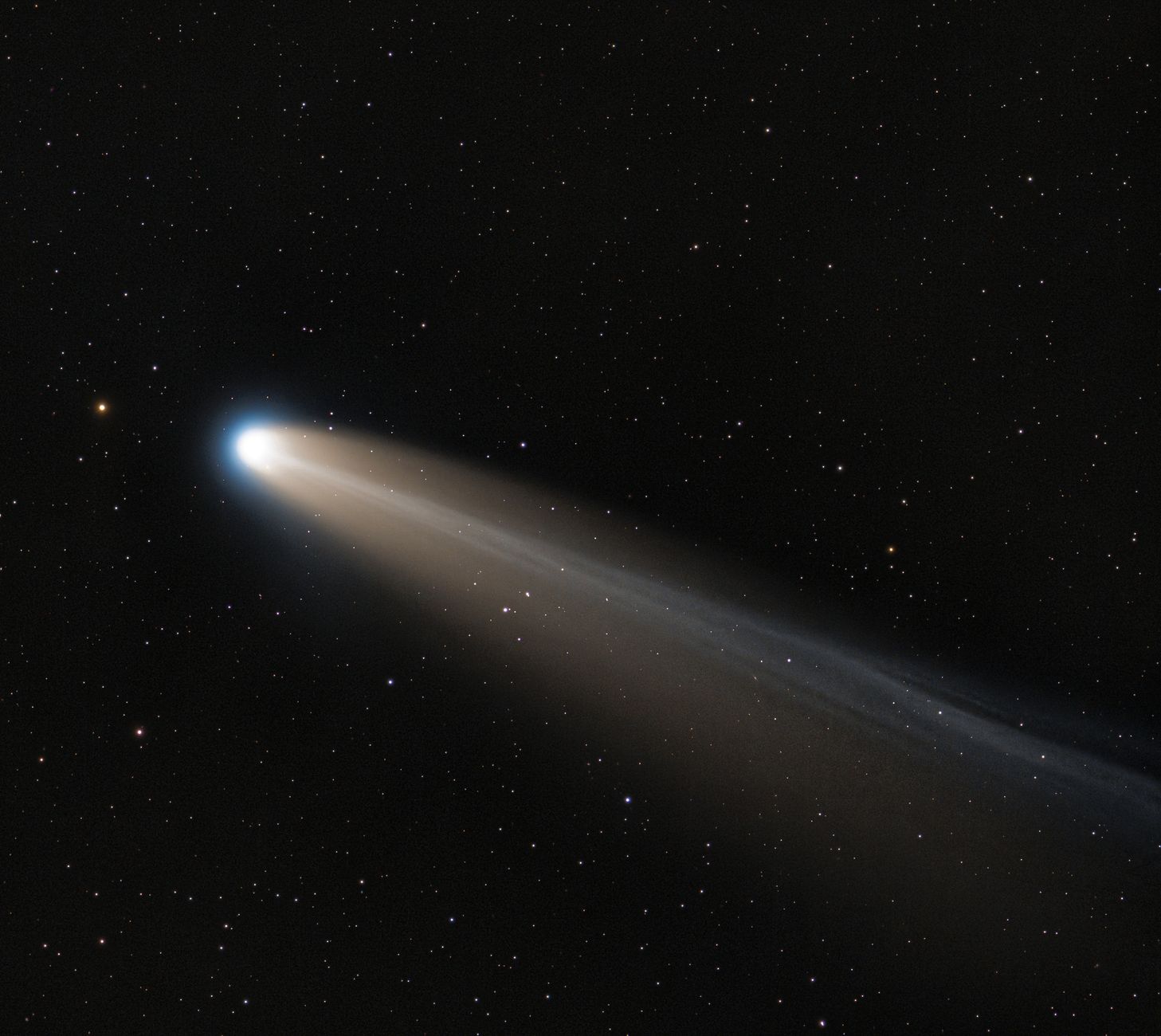

Halley’s Comet tracking is set to become a reality in 2061, as scientists reveal their plans to map a route for this iconic comet’s approach. This exciting development promises to enhance our understanding of this celestial phenomenon.
What is Halley’s Comet?
Halley’s Comet is one of the most famous comets in history, known for its spectacular appearance every 75 years. Its last visit to the inner solar system was in 1986, and it is expected to return in 2061. This celestial body has captivated astronomers and the public alike for centuries, making it a significant object of study.
Measuring about 15 kilometers in diameter, Halley’s Comet is classified as a periodic comet. Its orbit brings it close to the Sun, where the intense heat causes its ices to vaporize, creating a glowing coma and a long tail that can be seen from Earth. This visual spectacle has led to a rich tapestry of folklore and scientific inquiry.
In recent years, scientists have been working on Halley’s Comet tracking methods to ensure that enthusiasts and researchers can accurately follow its trajectory during its next approach. With advancements in technology, tracking Halley’s Comet will be more precise than ever, allowing for a better understanding of its composition and behavior. As 2061 approaches, preparations are underway to witness this remarkable event once again.
The significance of tracking Halley’s Comet
The significance of tracking Halley’s Comet extends beyond mere observation; it represents a unique opportunity for scientific discovery and public engagement. As Halley’s Comet approaches its next appearance in 2061, scientists and enthusiasts alike are eager to understand its composition and behavior.
Tracking Halley’s Comet allows researchers to:
- Study its physical properties: By analyzing the comet’s gases and dust, scientists can gain insights into the early solar system and the formation of planets.
- Observe its orbital dynamics: Understanding the comet’s trajectory helps predict its future paths and enhances our knowledge of gravitational interactions in space.
- Engage the public: The return of Halley’s Comet offers a chance to inspire interest in astronomy and science among the general population, fostering a new generation of space enthusiasts.
Furthermore, tracking Halley’s Comet can promote international collaboration. Scientists from different countries often work together on missions related to comets, sharing data and resources to better understand these celestial wonders. As we prepare for 2061, the excitement surrounding Halley’s Comet tracking underscores the importance of ongoing research and education in the field of astronomy.
How scientists plan to follow the comet
Scientists have formulated a comprehensive plan to track Halley’s Comet during its next appearance in 2061. This ambitious project aims to enhance our understanding of this celestial phenomenon and gather invaluable data about its composition and behavior.
The tracking process will involve a combination of ground-based observations and space missions. Key steps include:
- Launch of Observational Satellites: Specialized satellites will be deployed to monitor Halley’s Comet from various angles, providing real-time data on its trajectory and physical characteristics.
- Ground-Based Telescopes: Astronomers will utilize advanced telescopes to capture high-resolution images and spectra, enabling detailed analysis of the comet’s surface and tail.
- Collaboration Across Institutions: Global cooperation among space agencies, universities, and research institutions will be crucial in sharing findings and coordinating efforts in Halley’s Comet tracking.
- Public Engagement: Educational programs and outreach initiatives will inform the public about the comet’s journey, encouraging citizen science participation in monitoring activities.
Through these innovative strategies, scientists hope to unlock the mysteries of Halley’s Comet and enhance our appreciation of its significance in our solar system.
Historical context of Halley’s Comet sightings
Halley’s Comet has captivated humanity for centuries, with its spectacular returns drawing attention from astronomers and the public alike. First documented in 240 BC by Chinese astronomers, its periodic appearances have been recorded throughout history, influencing cultural and scientific developments.
This iconic comet is known for its bright tail and rapid orbit, returning to the inner solar system approximately every 75 years. Notable sightings include its 1910 appearance, when it gained notoriety for its proximity to Earth, inspiring widespread fascination and fear due to the mistaken belief that it could bring catastrophic events.
Another significant sighting occurred in 1986, when a fleet of spacecraft, including the European Space Agency’s Giotto, provided unprecedented data about its composition and structure. These missions laid the groundwork for contemporary efforts in Halley’s Comet tracking, enhancing our understanding of this celestial body.
As we approach its next return in 2061, scientists are preparing to utilize advanced technology and historical data to ensure accurate tracking of Halley’s Comet, enabling better observation and study of its features and behavior during this highly anticipated event.
Future implications of comet tracking
The future implications of Halley’s Comet tracking extend beyond mere observation; they offer a unique opportunity to enhance our understanding of comets and their trajectories. As scientists prepare for Halley’s Comet’s return in 2061, they are not only focusing on the comet’s path but also examining potential impacts on our solar system and Earth.
With advancements in technology and data collection, astronomers will be able to:
- Gather detailed data on the comet’s composition, which may provide insights into the early solar system.
- Study the effects of solar radiation on the comet as it approaches the sun, allowing for better predictions of its behavior.
- Develop tracking algorithms that could be applied to other celestial bodies, improving our ability to monitor near-Earth objects.
- Engage the public through educational programs and live tracking events, fostering a greater appreciation for space science.
As Halley’s Comet approaches, the implications of its tracking will resonate through scientific communities and the general public alike, enhancing our collective knowledge of the universe.
Public interest in Halley’s Comet 2061
As Halley’s Comet approaches its next appearance in 2061, public interest in its tracking is reaching new heights. This iconic comet, known for its spectacular displays, has captured the imagination of people for centuries. The anticipation surrounding its return is not just about witnessing a celestial event; it’s also about the scientific advancements that enable precise tracking of such a fast-moving object.
Many enthusiasts are eager to learn how to observe Halley’s Comet in the night sky. With the right tools and knowledge, amateur astronomers can participate in this historic event. Key steps include:
- Understanding the comet’s trajectory: Following updates from scientists about Halley’s Comet tracking will provide crucial information on when it will be visible.
- Utilizing technology: Mobile apps and telescopes can enhance the viewing experience, making it easier to spot the comet.
- Engaging with local astronomy clubs: Community events and gatherings will offer opportunities to learn and share experiences with fellow comet watchers.
As 2061 approaches, the excitement around Halley’s Comet continues to grow, reminding us of our connection to the universe.
For those interested in Halley’s Comet tracking, it is essential to familiarize yourself with the best viewing locations ahead of time. Additionally, Halley’s Comet tracking will be enhanced by using the latest astronomical apps and tools available in 2061.
Photo by Scott Lord on Pexels




Leave a Reply