
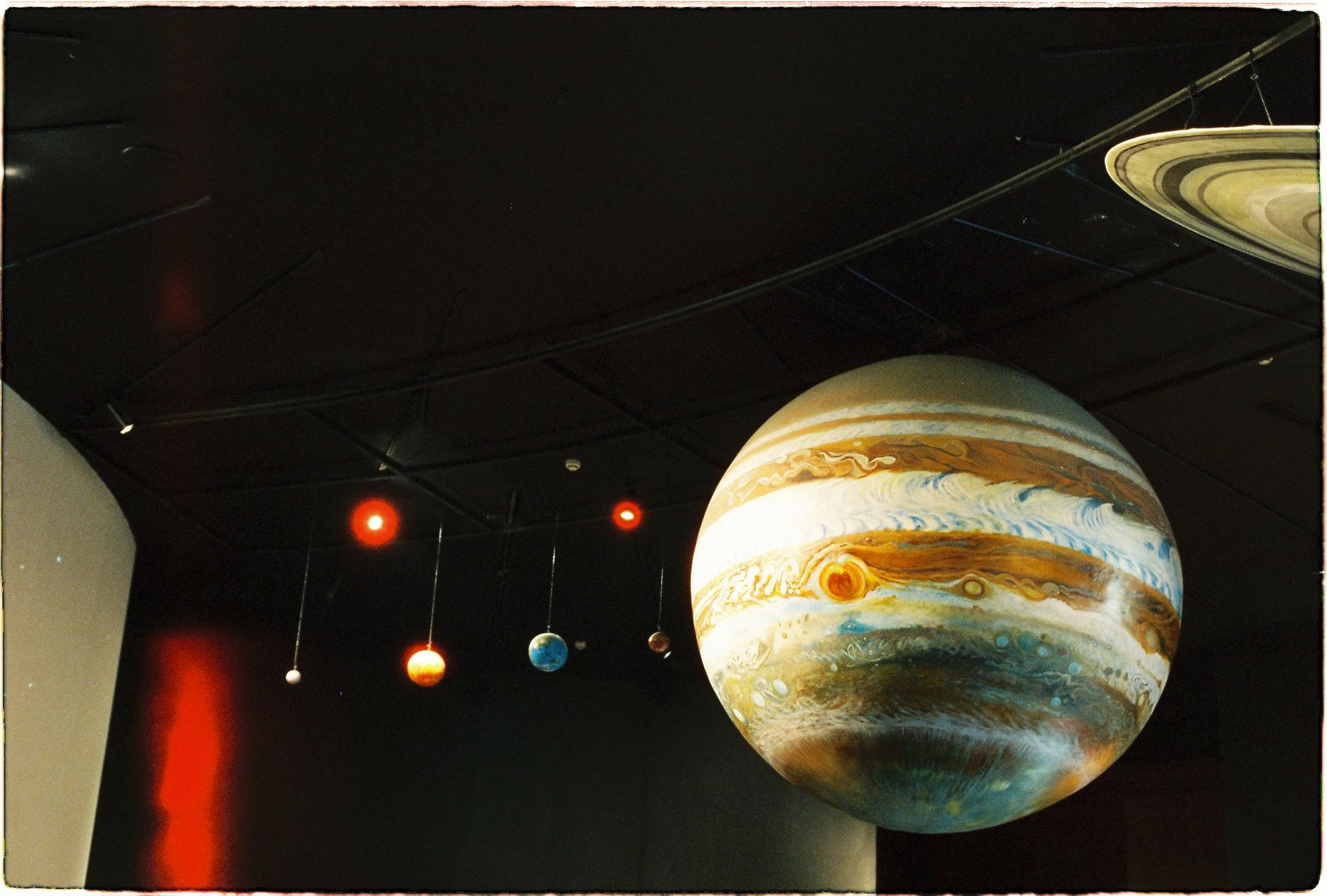

Jupiter particle defense is a surprisingly complex system that protects the planet from harmful solar particles. Recent studies highlight how this intricate mechanism operates, showcasing Jupiter’s unique role in our solar system.
Understanding Jupiter’s Role in Solar Defense
Jupiter, the largest planet in our solar system, plays a crucial role in defending the inner planets from harmful solar particles. Its immense gravitational pull acts as a shield, attracting and capturing many of the high-energy particles emitted by the sun. This phenomenon is especially significant given the increasing concern about solar storms and their potential impact on Earth.
Scientists have identified several mechanisms through which Jupiter contributes to solar defense:
- Gravitational Influence: Jupiter’s massive size allows it to exert a powerful gravitational force, pulling in solar particles that might otherwise reach the inner planets.
- Magnetic Field: Jupiter possesses the largest magnetic field in the solar system, which helps deflect charged particles away from its vicinity.
- Atmospheric Protection: The planet’s thick atmosphere provides an additional layer of defense, absorbing some of the energy from incoming particles.
Given these factors, the concept of a Jupiter particle defense system raises intriguing possibilities about how we might leverage the planet’s natural defenses to protect Earth from solar threats.
How Does Jupiter Protect Itself?
Jupiter, the largest planet in our solar system, employs a fascinating array of mechanisms to guard itself against solar particles. Its immense gravitational pull plays a crucial role in this protective process. By attracting and capturing a significant number of these particles, Jupiter acts as a shield for the inner planets, including Earth.
Additionally, the planet’s strong magnetic field contributes to its defense strategy. This magnetic field, which is 20,000 times stronger than Earth’s, creates a vast magnetosphere that traps charged particles. As a result, many harmful solar particles are diverted away from Jupiter and its surrounding environment.
Moreover, the planet’s numerous moons also contribute to the overall defense system. They can absorb and deflect some incoming particles, further reducing the potential risk to nearby celestial bodies.
In summary, Jupiter’s complex particle defense system not only protects itself but also plays a vital role in safeguarding the entire solar system from harmful solar activity. The significance of Jupiter’s particle defense mechanisms cannot be overstated, highlighting its importance in our cosmic neighborhood.
The Science Behind Jupiter’s Defense Mechanism
The science behind Jupiter’s defense mechanism reveals a fascinating interplay of gravitational forces and magnetic fields that contribute to the planet’s ability to shield the solar system from harmful particles.
Jupiter, with its immense mass, exerts a significant gravitational pull that influences the trajectory of solar particles. This gravitational influence creates a protective barrier, effectively redirecting many of these potentially dangerous particles away from the inner planets, including Earth. Additionally, the planet’s strong magnetic field plays a crucial role in this defense mechanism.
When solar particles approach Jupiter, they encounter its magnetosphere, which acts as a shield. This magnetic field captures charged particles, preventing them from penetrating the planet’s atmosphere and reducing their impact on nearby celestial bodies.
Some key components of Jupiter’s defense mechanism include:
- Gravitational Pull: Affects particle trajectories.
- Magnetosphere: Captures solar particles.
- Atmospheric Interaction: Further diminishes particle effects.
These elements illustrate why Jupiter particle defense is considered one of the most effective natural systems in protecting the solar system.
Implications for Future Space Exploration
The implications of Jupiter’s particle defense extend beyond our understanding of the gas giant itself; they may also influence future space exploration missions. As scientists examine how Jupiter’s immense gravitational pull acts as a shield against harmful solar particles, they can glean insights that could be applied to missions venturing further into the solar system.
One significant aspect to consider is how the knowledge of Jupiter’s defense mechanisms can inform the design of spacecraft and habitats in more exposed environments. For instance, understanding the dynamics of particle interactions in space can help engineers develop better shielding materials and technologies.
Moreover, the study of Jupiter’s particle defense could inspire new strategies for planetary protection, especially for missions aimed at exploring the outer planets and their moons. As we continue to unravel the complexities of how Jupiter defends itself, it becomes increasingly clear that leveraging this knowledge could be pivotal in ensuring the safety of future explorers and probes. Ultimately, Jupiter’s particle defense might serve as a model for safeguarding humanity’s ventures into the cosmos.
Many scientists believe that Jupiter particle defense could be a groundbreaking method for shielding Earth from potential cosmic threats. However, further research is needed to fully understand the implications of implementing Jupiter particle defense on a global scale.
Photo by meomupmofilm on Pexels



Leave a Reply